One day media training workshop on “Reporting Conflicts”
[embeddoc url=”http://www.pakpips.com/web_old/wp-content/uploads/2017/11/pr32.docx” download=”all” viewer=”microsoft” ]
 PIPS
PIPS [embeddoc url=”http://www.pakpips.com/web_old/wp-content/uploads/2017/11/pr32.docx” download=”all” viewer=”microsoft” ]
While journalists have the power to change narratives on conflict and influence public opinion, in Pakistan they lack the required capacity and professional training to develop progressive approaches to analyze and report conflicts. Besides practicing fundamental skills of journalism such as impartiality, accuracy, balance and ethics of investigation, journalists reporting conflicts should also develop skills … Read more
[embeddoc url=”http://www.pakpips.com/web_old/wp-content/uploads/2017/11/pr31.docx” download=”all” viewer=”microsoft” ]
[embeddoc url=”http://www.pakpips.com/web_old/wp-content/uploads/2017/11/pr30.docx” download=”all” viewer=”microsoft” ]
The purpose of this series of quarterly monitoring reports (2014) is to monitor and track the actions as well as public statements of five key STAP RP regional actors (India, Iran, Russia, China, SaudiArabia) on Pakistan; the development of, and their participation in relevant international and regional discussion meetings, including the Istanbul Process, Heart of … Read more
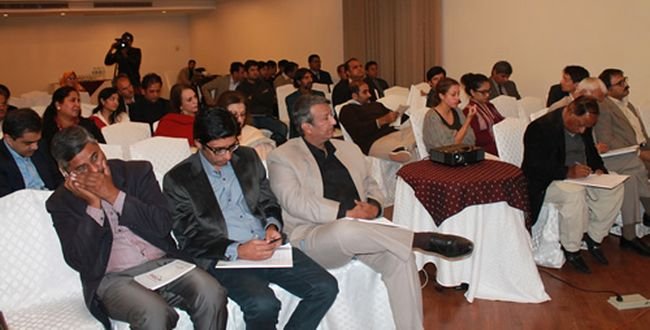
Scholars, experts and representatives of civil society and human rights organizations watched and reviewed some short films, documentaries and songs produced by Pak Institute for Peace Studies in collaboration with Narratives Pvt. (Ltd.) as part of its ongoing program “Creating an environment that supports interfaith harmony, peace and democratic discourse in Pakistan.” Screened in Islamabad … Read more
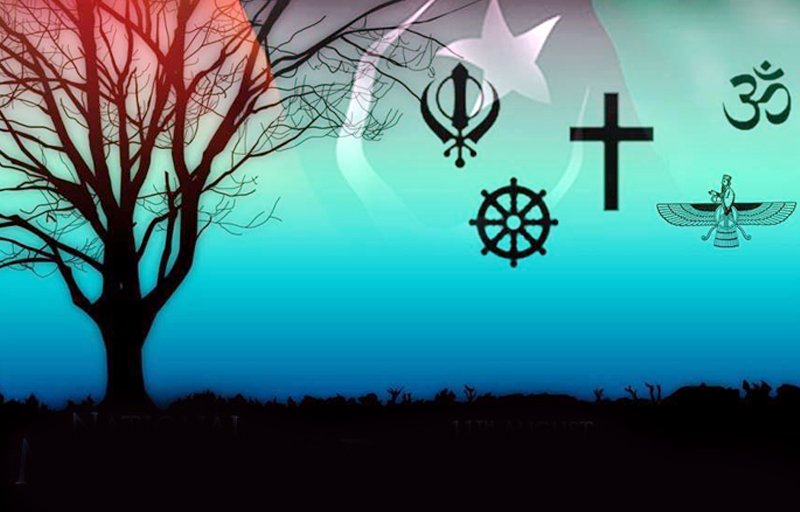
This survey-based study conducted by Pak Institute for Peace Studies has revealed that Pakistan’s religious minorities believe they are not part of the larger political, social and cultural mainstream. The report has tried to understand the lives of religious minorities and their interaction with other communities in Pakistan through a countrywide survey with 327 respondents … Read more
Jointly produced by PIPS and Barcelona Centre for International Affairs, famous as CIDOB, this quarterly monitoring brief (December 15, 2013 to March 31, 2014) tracks the actions as well as public statements of five key STAP RP regional actors (India, Iran, Russia, China, Saudi Arabia) on Pakistan. A part of CIDOB’s program, “the Sources of … Read more
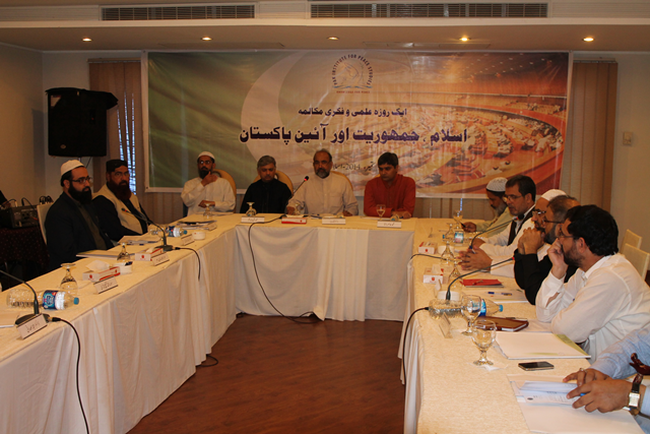
Pakistan’s Constitution is a national-level social contract and in the light of Islamic teachings every Pakistani is bound to abide by it. National-level disputes and conflicts, which are shared by all and not linked to certain religious sect or community, should be settled through the majority opinion. A minority cannot be granted the right to … Read more
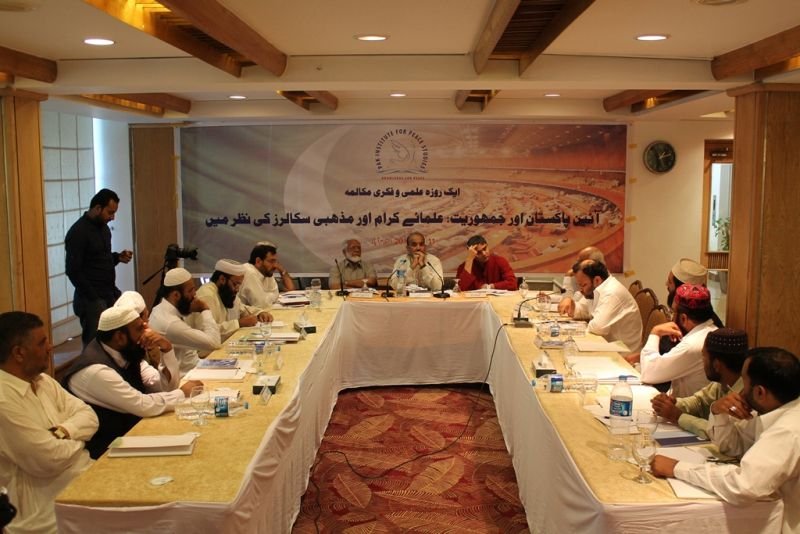
Muslim jurists’ support for monarchy in times of discord, as an alternative system to Islamic caliphate, was based on their understanding that Islam does not provide a specific framework to run the state affairs. It has been left to Muslims to decide about their system of government with mutual consultation and consensus. Once a social … Read more